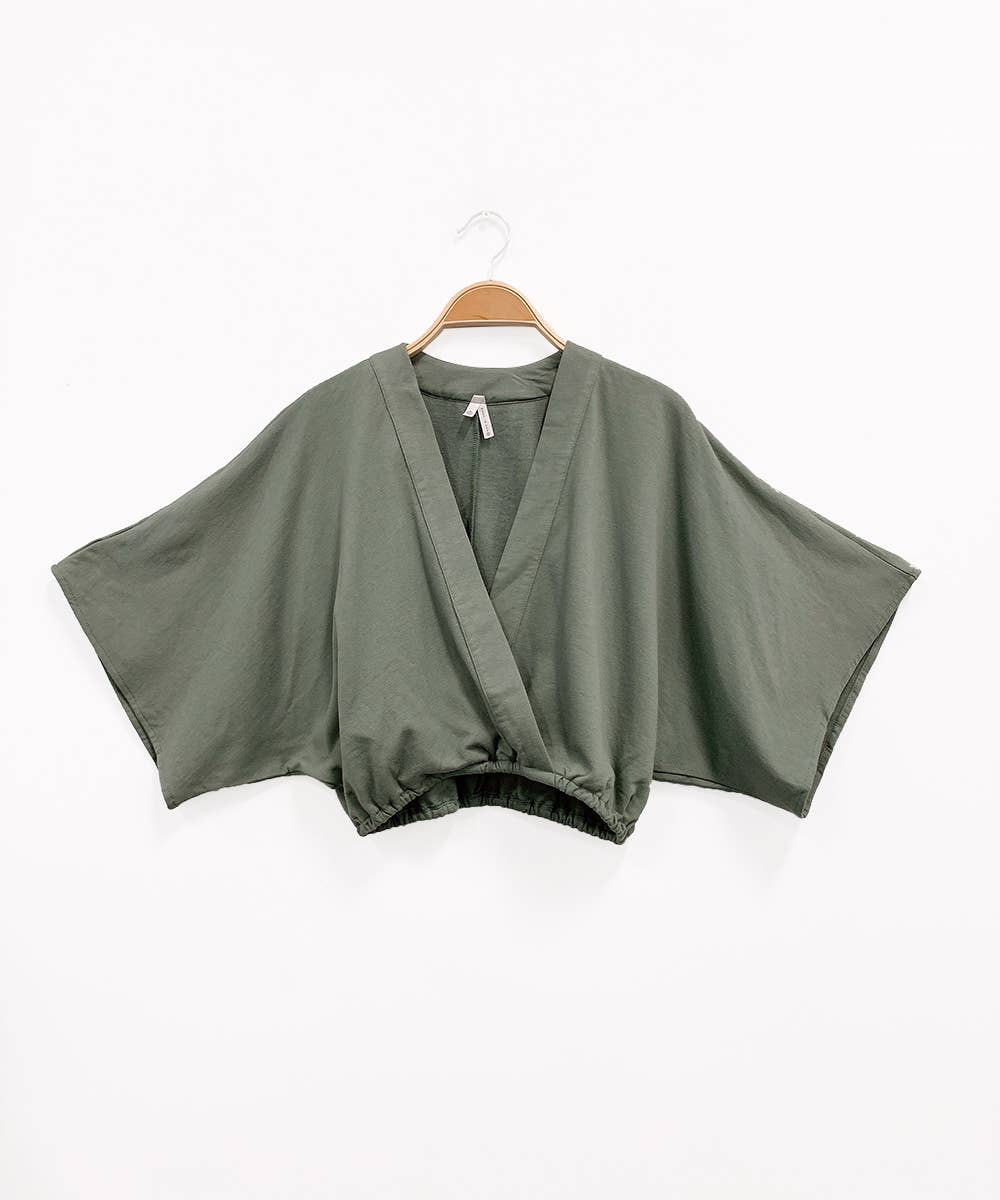
Organic Hemp Kimono Shirt
Organic Hemp Kimono Shirt
Get ready effortlessly with the oversized Hemp Crop Surplus Kimono from Fabina. Featuring roomy kimono sleeves, a relaxed fit, and a deep V neckline, it keeps you comfy while turning heads all day. Crafted from brushed organic hemp, this matte grey crop top feels luxuriously soft and eco-friendly.
With an elastic hemline for the perfect fit, it’s a playful, planet-friendly wardrobe winner made in the USA. Made of 60% hemp and 40% cotton, it’s your new go-to for easy style and good vibes!
Share
Benefits of Hemp Clothing
Benefits of Hemp Clothing
Hemp fabric offers significant benefits, including exceptional durability, a luxurious feel that softens with age, and excellent thermo-regulating properties, keeping you cool in the summer and warm in the winter. It is naturally hypoallergenic, antibacterial, and UV-resistant, providing protection for sensitive skin. From a sustainability perspective, hemp is an environmentally friendly choice because it grows quickly, requires fewer resources, and improves soil health, while the resulting fabric is biodegradable and compostable.
For Wearers:
Durable & Strong:
Hemp is one of the strongest natural fibers, making it incredibly long-lasting and resistant to tearing and stretching.
Softens with Use:
Unlike many fabrics, hemp becomes softer and more comfortable with every wash and wear.
Thermo-Regulating:
The fabric's structure helps keep you cool in hot weather and warm in cold, providing excellent insulation.
Hypoallergenic & Anti-Microbial:
Hemp is a great choice for those with allergies or sensitivities, as it is naturally resistant to bacteria, mold, and mildew, and doesn't cause irritation.
UV Resistant:
The natural fibers offer protection from harmful UV rays, and the fabric won't fade from sun exposure.
Moisture-Wicking:
Hemp is highly absorbent and can wick away moisture, keeping you dry and comfortable.
Breathable:
The porous structure of hemp fibers allows for good air circulation, enhancing comfort
Say Goodbye To Throwaway Clothing
Say Goodbye To Throwaway Clothing
Throw away clothing, or disposable fashion, is the result of a business model known as "fast fashion" that prioritizes low cost and rapidly changing trends over quality and longevity. This leads consumers to purchase and discard garments after only a few wears, creating a significant volume of textile waste.
How throwaway clothing works: The business model of throwaway clothing is driven by several factors:
- Trend replication: Fast fashion companies like Shein, Zara, and H&M quickly copy high-end designs and mass-produce them to bring the latest styles to consumers as fast as possible.
- Cheap materials and labor: To keep costs low and production fast, these garments are often made from inexpensive, low-quality synthetic materials like polyester, acrylic, and nylon, and manufactured with low-wage labor in developing countries.
- Encouraged consumption: New styles arrive in stores as often as every week. This creates a high turnover rate and a "see now, buy now" mentality, encouraging a cycle of frequent purchases.
- Planned obsolescence: The clothing is intentionally made to fall apart quickly, going out of style or becoming unwearable after a short time. This drives consumers to buy new items to stay on-trend.
The throwaway clothing model has major environmental and social impacts.
Environmental effects
- Massive textile waste: An estimated 92 million tons of textile waste are generated globally each year. In the U.S., the average person throws away over 80 pounds of textiles annually.
- Pollution: The production of throwaway clothing is highly polluting. The textile industry is the world's second-biggest consumer of water, and its dyeing processes pollute rivers and groundwater with toxic chemicals.
- Microplastic pollution: The synthetic materials used in many fast-fashion garments shed millions of tiny plastic fibers, or microplastics, with every wash. These enter waterways and harm aquatic life.
- Landfill contamination: When discarded, non-biodegradable synthetic fibers can take centuries to decompose in landfills, releasing greenhouse gases and leaching chemicals into the soil and water.
Social effects
- Exploited labor: Garment workers in developing countries, many of whom are young women, often work long hours for low wages in unsafe conditions. Major fast-fashion brands have faced scrutiny over labor violations.
- Human health risks: The toxic chemicals used in textile production pose health risks to both garment workers and local communities through air and water pollution.
- Economic burden: Textile waste is a significant problem for developing countries, which are often sent discarded clothes from wealthier nations. In Ghana, for example, the sheer volume of low-quality, unusable clothes has clogged gutters, worsened flooding, and contaminated water sources.
How to avoid throwaway clothing:
You can take steps to move away from a "buy-and-discard" mindset:
- Support sustainable brands: Research and purchase from brands that prioritize ethical labor and use sustainable materials like hemp.
- Buy less and choose well: Invest in higher-quality, timeless pieces that are durable and made to last.
- Shop secondhand: Extend the life of garments by buying from thrift stores, consignment shops, and online resale platforms.
- Repair and repurpose: Fix damaged items instead of throwing them away. You can learn to sew or take clothes to a tailor. Old textiles can also be repurposed as cleaning rags.