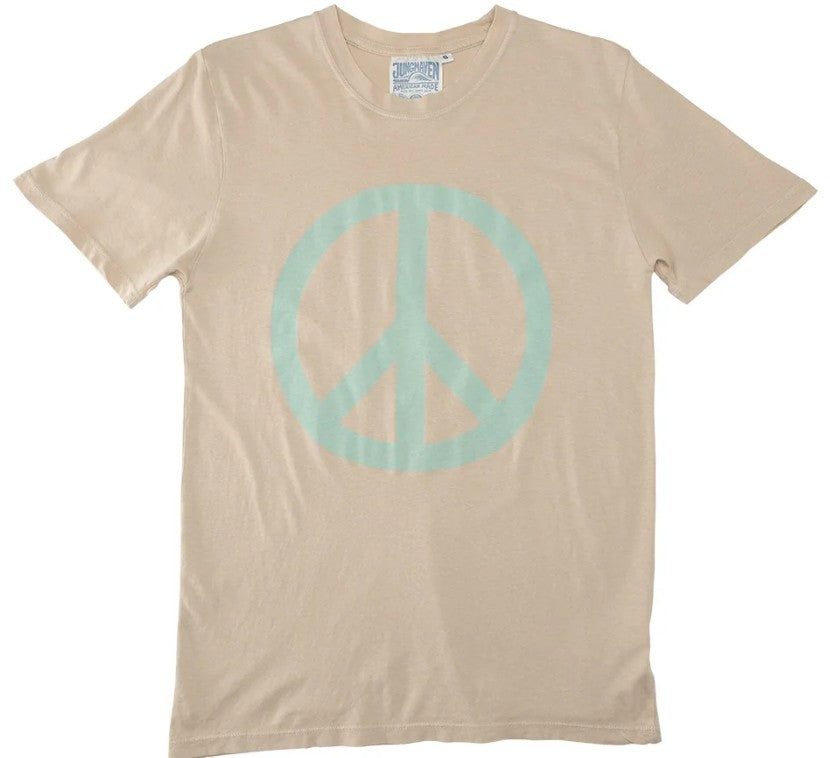
Jungmaven | Peace Hemp Blend Basic Tee
Jungmaven | Peace Hemp Blend Basic Tee
Crafted with care from hemp in California, the Peace Tee inspires a continuous pursuit of peace inside and around us. Featuring a screen-printed design using eco-friendly water-based ink, this tee offers unbeatable softness and a lightweight feel for all-day comfort.
Share
Details
Details
- Relaxed fit, short sleeve, crewneck tee
- Ultra lightweight 3.6 oz blend makes for a silken-soft finish and ultimate breathability
- Straight fit from chest to waist
- Less structured drape and neckline than heavier tees (i.e., Baja & Boulder)
- Lighter colors are slightly sheer, particularly when compared to heavier blends
- Women may want to size down
Hemp Fabric Care
Hemp Fabric Care
Hemp will take good care of you, especially if you take good care of it. Below are some suggested tips for taking the best care of your hemp.
HEMP + ORGANIC COTTON BLENDS:
- Machine wash cool, gentle with like colors.
- Tumble dry, low heat.
- Do not use spot laundry cleaners, bleach or other chemical and enzyme cleaners like oxi-clean.
- Take care not to wash with garments with zippers or velcro or towels with texture as this will cause abrasion and pilling.
Why Jungmaven Clothing?
Why Jungmaven Clothing?
- Mission
Jungmaven’s mission is to raise awareness about the many uses of hemp, and why its regenerative qualities make it a desirable alternative to finite, natural resources that are less healthy for the environment. Fashion is a form of activism: what we choose to wear says both who we are and what we stand for. Making beautiful, high-quality hemp clothing is Jungmaven’s way of creating a medium through which we can all demand change with our dollars and express what kind of future we want to live in.
- Solution
Jungmaven launched HEMP 2020 a decade ago to raise awareness around the positive environmental impacts of hemp farming and to get hemp legal to grow again in the US. We’ve made major progress, and are seeing hemp become widely recognized for its benefits. As we look forward into the next decade, we face a critical moment in the history of our planet. Let’s build a future where people and the planet exist in a mutually beneficial
state, recognizing that we are all ONE.
- Advocacy
Robert Jungmann, Jungmaven founder, is a founding member of
the Hemp Industries Association– a group formed in 1994 and instrumental in the legalization of industrial hemp. Their work directly led to the passing of the 2018 Farm Bill which was a giant win for hemp– making it legal to grow again in the United States for the first time since 1937. This step was a new beginning for hemp, and while the US hemp industry is now headed in a good direction–it isn’t yet producing enough to meet production demands for our garments.
- Transparency
The organic cotton blended with Jungmaven’s hemp meets the Global Organic Textile Standard (GOTS) and is Organic Content Certified (OCS). Every Jungmaven piece (aside from socks, beanies, and scarves) is proudly cut and sewn in California by partners who are Garment Authority (GA) certified—meeting some of the highest standards in the U.S. for
ethical labor and fair wages.
- Circularity
Jungmaven’s “Ever Jung” Resell platform enables peer-to-peer resale of Jungmaven garments, encouraging longer product lifespans and reducing waste while supporting mindful consumption.
Say Goodbye To Throwaway Clothing
Say Goodbye To Throwaway Clothing
Throw away clothing, or disposable fashion, is the result of a business model known as "fast fashion" that prioritizes low cost and rapidly changing trends over quality and longevity. This leads consumers to purchase and discard garments after only a few wears, creating a significant volume of textile waste.How throwaway clothing works. The business model of throwaway clothing is driven by several factors:
- Trend replication: Fast fashion companies like Shein, Zara, and H&M quickly copy high-end designs and mass-produce them to bring the latest styles to consumers as fast as possible.
- Cheap materials and labor: To keep costs low and production fast, these garments are often made from inexpensive, low-quality synthetic materials like polyester, acrylic, and nylon, and manufactured with low-wage labor in developing countries.
- Encouraged consumption: New styles arrive in stores as often as every week. This creates a high turnover rate and a "see now, buy now" mentality, encouraging a cycle of frequent purchases.
- Planned obsolescence: The clothing is intentionally made to fall apart quickly, going out of style or becoming unwearable after a short time. This drives consumers to buy new items to stay on-trend.
The throwaway clothing model has major environmental and social impacts.
Environmental effects
- Massive textile waste: An estimated 92 million tons of textile waste are generated globally each year. In the U.S., the average person throws away over 80 pounds of textiles annually.
- Pollution: The production of throwaway clothing is highly polluting. The textile industry is the world's second-biggest consumer of water, and its dyeing processes pollute rivers and groundwater with toxic chemicals.
- Microplastic pollution: The synthetic materials used in many fast-fashion garments shed millions of tiny plastic fibers, or microplastics, with every wash. These enter waterways and harm aquatic life.
- Landfill contamination: When discarded, non-biodegradable synthetic fibers can take centuries to decompose in landfills, releasing greenhouse gases and leaching chemicals into the soil and water.
Social effects
- Exploited labor: Garment workers in developing countries, many of whom are young women, often work long hours for low wages in unsafe conditions. Major fast-fashion brands have faced scrutiny over labor violations.
- Human health risks: The toxic chemicals used in textile production pose health risks to both garment workers and local communities through air and water pollution.
- Economic burden: Textile waste is a significant problem for developing countries, which are often sent discarded clothes from wealthier nations. In Ghana, for example, the sheer volume of low-quality, unusable clothes has clogged gutters, worsened flooding, and contaminated water sources.
How to avoid throwaway clothing:
You can take steps to move away from a "buy-and-discard" mindset:
- Support sustainable brands: Research and purchase from brands that prioritize ethical labor and use sustainable materials like hemp.
- Buy less and choose well: Invest in higher-quality, timeless pieces that are durable and made to last.
- Shop secondhand: Extend the life of garments by buying from thrift stores, consignment shops, and online resale platforms.
- Repair and repurpose: Fix damaged items instead of throwing them away. You can learn to sew or take clothes to a tailor. Old textiles can also be repurposed as cleaning rags.